Table of Contents
Your driveway is the first thing visitors see when they pull up to your home, and on Long Island, where curb appeal matters, a cracked or crumbling driveway sends the wrong message. This guide walks you through every aspect of driveway replacement: how to know when it is time, which material is right for your situation, what it will cost, and how to find a contractor who will do the job right.
Signs Your Driveway Needs Replacement
Not every crack means you need a new driveway. But there are clear signs that patching and repairs are no longer worth the investment. Here is what to look for.
Asphalt Driveway Warning Signs
- Alligator cracking. A web of interconnected cracks that resembles alligator skin. This indicates the base has failed and resurfacing alone will not fix it.
- Large potholes or sinkholes. Isolated potholes can be patched, but multiple potholes or areas where the surface is sinking indicate base failure.
- Widespread crumbling edges. If the edges of your driveway are breaking apart along the sides, the material has deteriorated beyond repair.
- Poor drainage or pooling water. If water pools in the middle of your driveway or flows toward your garage, the grade has shifted and a new installation with proper slope is needed.
- Age. Asphalt driveways on Long Island typically last 15 to 20 years with regular sealcoating. If yours is past that age and showing multiple issues, replacement makes more sense than continued repairs.
Concrete Driveway Warning Signs
- Heaving or frost jacking. Long Island freeze-thaw cycles can push concrete slabs upward, creating trip hazards and uneven surfaces. Once slabs have shifted significantly, they rarely settle back.
- Spalling surface. If the top layer of concrete is flaking, pitting, or peeling away, the surface has been compromised by moisture penetration and freeze-thaw damage.
- Wide or deep cracks. Cracks wider than 1/2 inch or cracks that go through the full depth of the slab indicate structural failure rather than simple surface wear.
- Settling or sinking. If sections of the driveway are noticeably lower than others, the base soil has compacted or eroded. Mudjacking can sometimes address minor settling, but significant sinking usually requires replacement.
Repair vs. Replace: A Quick Rule
If the cost of repairs exceeds 30 to 40 percent of what a full replacement would cost, replace the driveway. You will get a new base, proper drainage, a fresh surface, and a full lifespan ahead of you rather than a patched surface that continues to deteriorate.
Asphalt vs Pavers vs Concrete: Full Comparison
Choosing the right material for your replacement driveway is the single biggest decision you will make. Here is an honest comparison of all three options based on our experience installing hundreds of driveways across Long Island.
| Factor | Asphalt | Concrete | Pavers |
|---|---|---|---|
| Cost per sq ft | $5 to $8 | $12 to $20 | $20 to $35 |
| Lifespan | 15 to 20 years | 20 to 30 years | 25 to 50+ years |
| Maintenance | Sealcoat every 2 to 3 years | Seal cracks, occasional resurfacing | Joint sand top-off, optional sealing |
| Freeze-Thaw Resistance | Good | Fair (prone to cracking) | Excellent (flexible joints) |
| Repairability | Patch or resurface | Patch (visible) | Replace individual units |
| Curb Appeal | Basic (black surface) | Clean, modern | Highest (many styles) |
| Installation Time | 2 to 3 days | 3 to 5 days + curing | 5 to 10 days |
| ROI / Home Value | Moderate | Moderate to good | Highest |
When Asphalt Makes Sense
Asphalt is the right choice when budget is the primary concern and you need a functional, clean-looking surface. It is the most affordable option by a significant margin and performs well in Long Island's climate when maintained with regular sealcoating every 2 to 3 years. If you want to elevate the look without the full cost of pavers, an asphalt driveway with a Belgian block or paver border is a popular middle-ground option that adds curb appeal at a fraction of the cost. Learn more about our asphalt driveway installation.
When Concrete Makes Sense
Concrete provides a clean, modern look and is more durable than asphalt. It is a good mid-range option for homeowners who want something better than asphalt but do not want the full investment of pavers. Stamped or exposed aggregate concrete can add visual interest. The main downside on Long Island is that concrete is susceptible to cracking from freeze-thaw cycles. Proper control joints and a good base help, but some cracking over time is normal. See our concrete driveway installation page for details.
When Pavers Make Sense
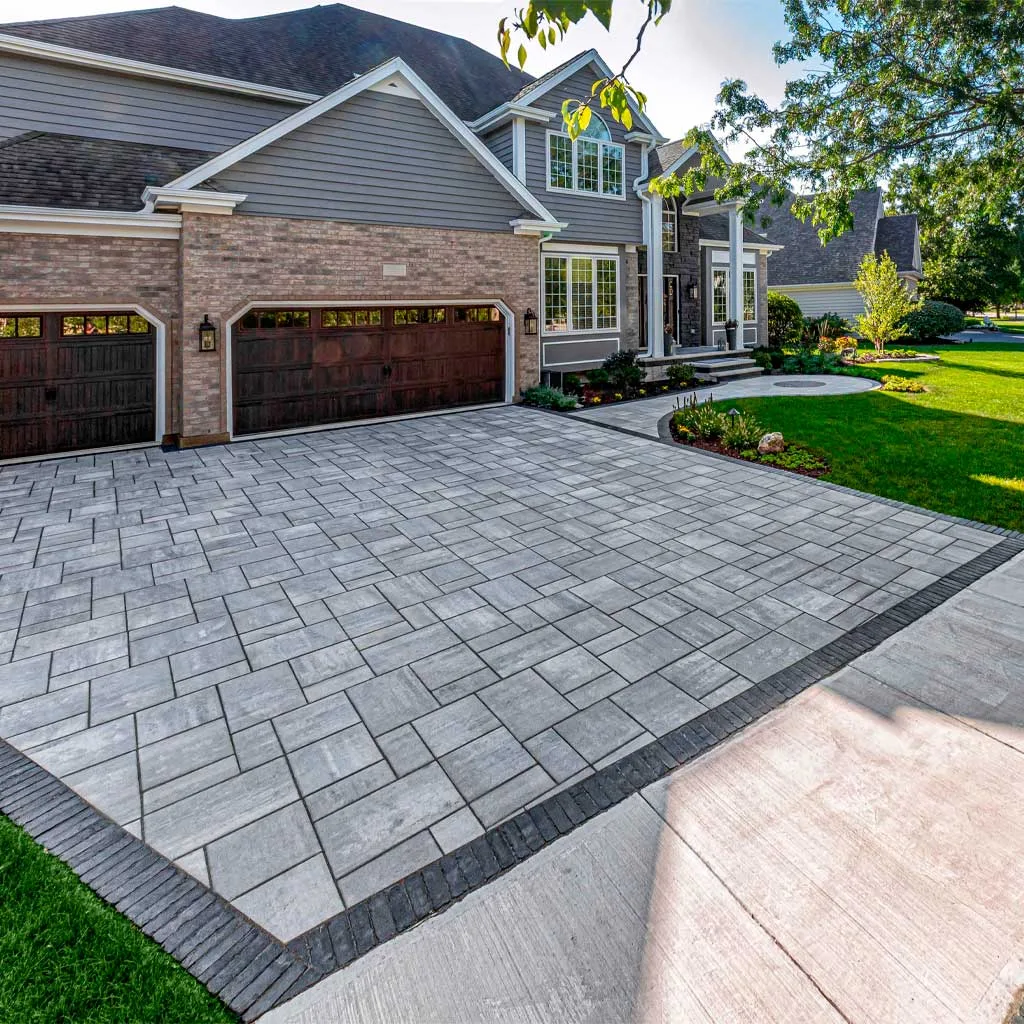
Pavers are the premium choice and the best long-term investment. The flexible joint system handles Long Island's freeze-thaw cycles without cracking. Individual pavers can be replaced if damaged. The design options are nearly unlimited. If you plan to stay in your home for 10 or more years, the upfront cost of pavers is offset by their superior lifespan and minimal maintenance. Read our complete paver driveway guide for in-depth information on materials, brands, and patterns.
Driveway Replacement Cost Breakdown
Here is what you can expect to pay for a complete driveway replacement on Long Island, including demolition of the existing surface, base preparation, and installation.
| Driveway Size | Asphalt | Concrete | Pavers |
|---|---|---|---|
| 400 sq ft (1-car) | $2,000 to $3,200 | $4,800 to $8,000 | $8,800 to $14,000 |
| 600 sq ft (2-car) | $3,000 to $4,800 | $7,200 to $12,000 | $13,200 to $21,000 |
| 1,000 sq ft (large 2-car) | $5,000 to $8,000 | $12,000 to $20,000 | $22,000 to $35,000 |
| 1,500+ sq ft (extended) | $7,500 to $12,000 | $18,000 to $30,000 | $33,000 to $52,500+ |
Additional Costs to Plan For
- Demolition. Removal of the existing driveway surface is typically included in the replacement price. Thick concrete slabs (6 inches or more) may add $1 to $3 per square foot.
- Drainage improvements. If your old driveway had water pooling issues, adding a channel drain or French drain typically costs $1,500 to $4,000 depending on the length and complexity.
- Apron reconstruction. The section of driveway between the sidewalk and the street (the apron) may need to be replaced separately, especially if you are changing materials. Apron work costs $1,000 to $3,000.
- Belgian block or paver border. Adding a decorative border to an asphalt or concrete driveway costs $15 to $30 per linear foot and significantly improves curb appeal.
- Permits. Permit fees on Long Island range from $50 to $300 depending on the town and scope of work.
We offer free, detailed estimates that break down every cost. No surprises, no hidden fees.
Need a Driveway Replacement Estimate?
We will visit your property, evaluate your existing driveway, and provide a detailed quote for free.
Get Your Free EstimateDriveway Permitting on Long Island
Permitting requirements for driveway work vary from town to town across Long Island. Here is a general overview of what to expect. Your contractor should handle the permit process, but it helps to understand the basics.
When a Permit Is Typically Required
- Changing the driveway material (for example, replacing asphalt with pavers)
- Expanding the driveway footprint or adding a parking pad
- Modifying or adding a curb cut
- Adding heating elements or electrical work
- Any work that changes drainage patterns on the property
Town-by-Town Notes
- Town of Hempstead. Requires a building permit for most driveway replacements, especially if the material or footprint is changing. Expect 2 to 4 weeks for permit approval.
- Town of Babylon. Requires permits for new driveway installations and material changes. Babylon has specific lot coverage requirements that may limit driveway size.
- Town of Islip. Permits are required for driveway replacements that change the material or layout. Islip also has stormwater management requirements for properties in certain flood zones.
- Town of Brookhaven. Requires a building permit for driveway construction and replacement. Brookhaven has specific setback requirements from property lines.
- Town of Huntington. Permits are required for driveway work. Huntington has lot coverage maximums that restrict impervious surface area, which can affect driveway sizing.
At Brothers Paving & Masonry, we handle the permitting process for our customers as part of every driveway replacement project. We know the requirements for each Long Island town and can advise you on any limitations that may affect your project.
The Driveway Replacement Process
Here is what a complete driveway replacement looks like from start to finish.
On-Site Consultation
We visit your property, assess the condition of your current driveway, discuss your goals and budget, and recommend the best material and approach. We measure the driveway and identify any drainage, grading, or access issues.
Detailed Estimate and Material Selection
We provide a written estimate that includes demolition, base work, material, installation, and any additional items like drainage or borders. If you are choosing pavers, we bring samples so you can see the colors and textures in person.
Permitting
If a permit is required by your town, we prepare and submit the application. Permit timelines vary from 1 to 4 weeks depending on the municipality.
Demolition and Removal
We demolish the existing driveway surface using excavators and haul all debris away. Asphalt and concrete are typically recycled. We also address any issues discovered during demolition, such as root intrusion or deteriorated subsoil.
Grading and Base Preparation
The subgrade is graded for proper drainage. We install a compacted base of crushed concrete or processed gravel. For paver and concrete driveways, this step is the most important and the most time-consuming. We use multiple compacted lifts to achieve a rock-solid foundation.
Surface Installation
For asphalt, we lay the hot mix in one or two lifts and compact it with a roller. For concrete, we form and pour the slab with proper control joints. For pavers, we screed the bedding layer, place each paver by hand, install edge restraints, and apply polymeric joint sand.
Finishing and Cleanup
We complete all edging, borders, and transitions. The work area is cleaned, lawn areas are restored, and we walk through the finished project with you. We provide care instructions specific to your new driveway material.
View our full range of driveway paving services.
Timeline Expectations
Understanding the timeline helps you plan around the disruption. Here is what to expect for each material type.
| Phase | Asphalt | Concrete | Pavers |
|---|---|---|---|
| Demolition | 1 day | 1 day | 1 day |
| Base prep | 1 day | 1 to 2 days | 2 to 3 days |
| Installation | 1 day | 1 to 2 days | 2 to 5 days |
| Curing / driveable | 24 to 48 hours | 7 days minimum | Immediately |
| Total project | 2 to 3 days | 3 to 5 days + curing | 5 to 10 days |
Keep in mind that these timelines assume good weather. Rain delays are common on Long Island, especially during spring. Asphalt cannot be installed in the rain. Concrete pours need dry conditions for at least 24 hours. Paver installation can proceed in light rain but not during heavy downpours.
Winter vs Summer Installation
The time of year you install your driveway matters. Each season has trade-offs.
Peak Season: May through October
This is when most driveway work happens on Long Island. Warm temperatures are ideal for all three material types. The downside is that contractors are busiest during these months, so lead times can stretch to 3 to 6 weeks from signing to start. Book early in the season (March or April) to secure your preferred timing.
Off-Season: November through March
Asphalt plants on Long Island typically close from mid-December through March, so asphalt installation is not possible during deep winter. Concrete should not be poured when temperatures drop below freezing. Paver installation can be done in winter as long as the ground is not frozen solid, though it is more difficult and may cost slightly more due to the added challenges. The advantage of off-season scheduling is shorter wait times and potentially better pricing from contractors looking to keep their crews working.
Best Advice
Contact contractors in January or February to get estimates and book your project for a spring start. This gives you time to compare bids, finalize material choices, and get on the schedule before the summer rush. Most Long Island paving contractors fill their spring and summer calendars quickly.
Financing Your Driveway Replacement
A driveway replacement is a significant investment, especially if you choose concrete or pavers. Here are the most common ways Long Island homeowners pay for driveway projects.
- Cash or savings. The simplest approach and avoids any interest charges.
- Contractor financing. Many reputable contractors, including Brothers Paving & Masonry, offer financing options that allow you to spread payments over 12 to 60 months. Some plans offer promotional 0% interest for qualifying customers.
- Home equity line of credit (HELOC). If you have equity in your home, a HELOC offers lower interest rates than personal loans. The interest may also be tax-deductible for home improvement projects.
- Personal loan. Unsecured personal loans from banks or online lenders typically offer fixed rates and terms of 2 to 7 years. Rates vary based on credit score.
- Credit cards. Suitable for smaller projects or if you can pay the balance off quickly. Some cards offer 0% intro APR promotions for 12 to 18 months.
Regardless of how you pay, get everything in writing before work begins. A reputable contractor will never ask for full payment upfront. A typical payment structure is a deposit (usually 10 to 30 percent) with the balance due upon completion.
Need Help Choosing the Right Driveway?
Our team will evaluate your current driveway, discuss options, and provide expert guidance at no cost.
Choosing a Driveway Contractor on Long Island
The contractor you hire determines whether your new driveway lasts its full expected lifespan or begins failing within a few years. Here is how to evaluate your options.
- Get at least three estimates. Compare not just price but also the scope of work, material specifications, base depth, and warranty terms. The lowest bid is rarely the best value.
- Verify insurance and references. Ask for proof of general liability and workers' compensation insurance. Check Google reviews and ask for recent customer references you can contact.
- Ask about their base process. A contractor who cannot explain their base preparation in detail is a red flag. Ask what material they use, how deep, and how it is compacted.
- Demand a written contract. The contract should detail the material, base specifications, project timeline, payment schedule, warranty, and what happens if problems arise. Never work with a contractor who operates on a handshake.
- Beware of door-to-door offers. Contractors who knock on your door offering a deal because they are "in the neighborhood" are almost always cutting corners. Reputable contractors get work through referrals, reviews, and their reputation.
At Brothers Paving & Masonry, we provide detailed written estimates, handle permitting, and back every project with a 5-year craftsmanship warranty. Our Google rating is 5 stars across 70 reviews. We have been serving Long Island homeowners for over 15 years.