Loading...
Loading...
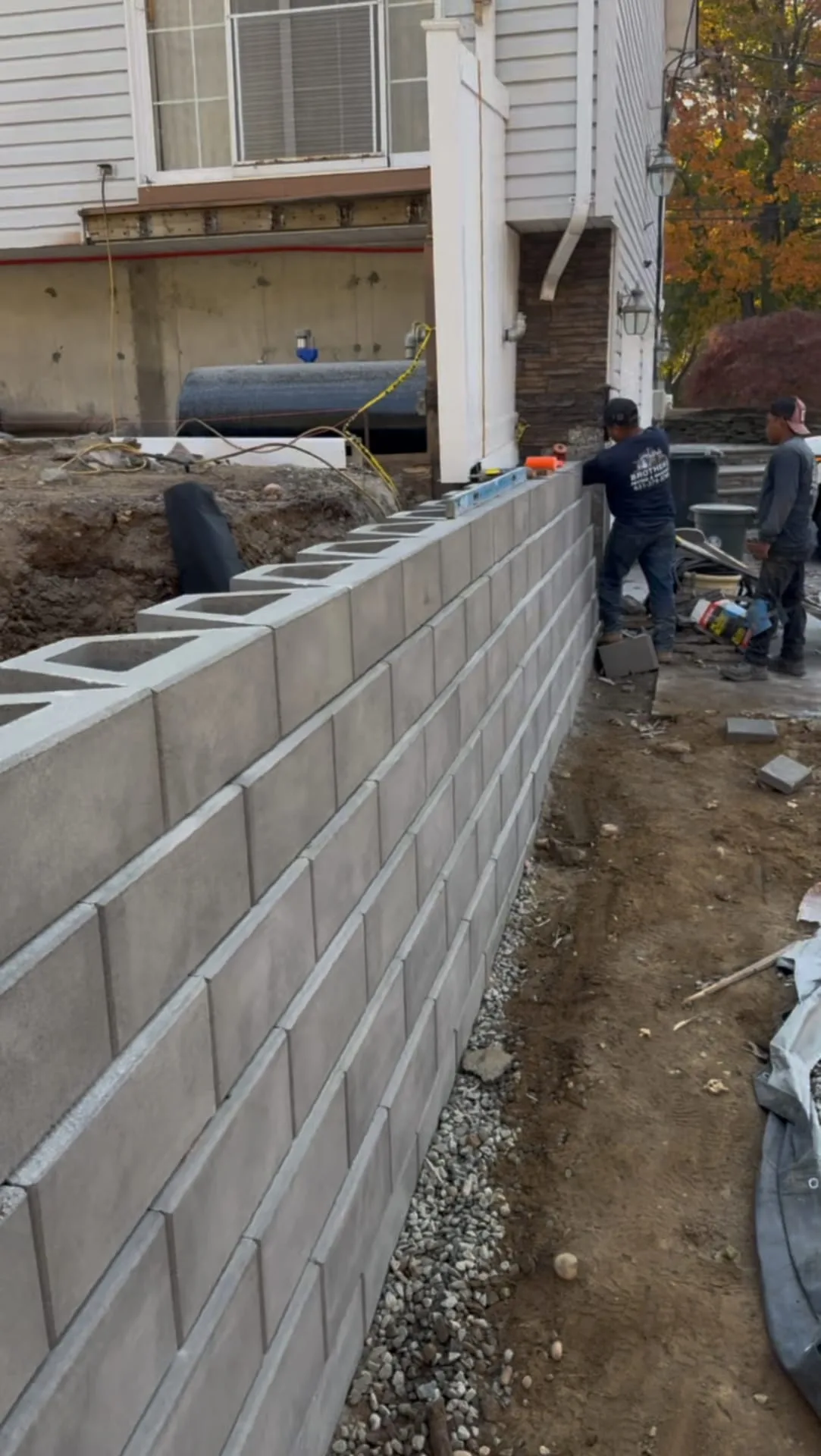
Professional retaining walls for Port Jefferson Station homeowners. Residential hamlet, LIRR access near Port Jefferson
Port Jefferson Station's terrain is more moderate than the steep harbor-side village to the north, but the glacial soils still create retaining wall needs throughout this residential community. Grade transitions between properties, sloped yards that lose soil during storms, and aging timber walls reaching the end of their lifespan are common reasons PJ Station homeowners call Brothers Paving & Masonry for retaining wall solutions. We build walls here that solve practical grading problems while adding lasting visual value to the property.
Our retaining wall projects in Port Jefferson Station range from 2-foot decorative garden walls that add structure to flat landscapes to 4-foot grade correction walls that manage the moderate slopes present in the community's hillier sections. We work with Cambridge and Nicolock segmental block systems that deliver reliable structural performance in a wide range of colors and textures, as well as natural stone options for homeowners seeking a more organic aesthetic.
The combination of clay and gravel in Port Jefferson Station's glacial soils requires proper drainage behind every retaining wall — this is not optional here. Clay pockets trap water, create pressure, and cause walls without drainage to lean and eventually fail. Every wall we build includes aggregate backfill and perforated pipe as standard construction, regardless of wall height.
Port Jefferson Station's terrain is gentler than the steep harbor village to the north, but the glacial soils are similar — a mix of clay, gravel, and occasional rock that varies from lot to lot. The clay component is the primary concern for retaining wall construction because it retains water, swells, and generates lateral pressure against wall structures. Properties in the northern and eastern sections of the community, closer to the moraine ridge, tend to have heavier clay content and steeper grades, while the southern areas are flatter with more mixed soils.
The community's diverse housing stock includes older homes near the train station and newer developments on former agricultural land. Older properties frequently have existing retaining walls — timber, railroad ties, or early landscape block — that are failing after 15 to 25 years of service. These walls were typically built without proper footings or drainage, and the clay-heavy soils have exerted enough pressure over time to push them out of alignment. We replace these failing structures with properly engineered walls that address the root cause of failure.
North Shore freeze-thaw cycling affects Port Jefferson Station, though the community's slightly more sheltered position compared to the direct Sound-facing villages moderates the severity somewhat. We still specify materials rated for the North Shore climate zone and install drainage systems designed to prevent water from accumulating and freezing behind wall structures during winter.
Many Port Jefferson Station homeowners are looking for retaining walls that serve dual purposes — solving a grading problem while also creating a landscape feature. A grade correction wall along the back of the yard can also serve as the backdrop for a garden bed. A property line wall can incorporate a seating area on the owner's side. We design walls with these dual-function opportunities in mind, maximizing the value of the investment.
Explore the full range of retaining walls solutions we offer to Port Jefferson Station residents.
A well-designed garden wall transforms an ordinary Long Island landscape into a structured, visually compelling outdoor ...
Learn MoreRaised flower beds built with quality masonry are one of the most beautiful and practical additions you can make to a Lo...
Learn MorePlanter walls combine the structural strength of a retaining wall with the beauty of integrated landscaping, creating a ...
Learn MoreSeating walls are one of the most functional and rewarding hardscape features you can add to a Long Island property. Bro...
Learn MorePort Jefferson Station's mixed glacial soils — clay, gravel, and occasional rock — require retaining wall drainage systems on every project regardless of wall height. The clay component traps water and creates pressure that can push even short walls out of alignment over years. We install a minimum 12-inch drainage aggregate zone with perforated pipe behind all walls, pitched to a positive outlet. Footings are excavated below frost depth into stable bearing material, seated on a minimum 8-inch compacted aggregate base. For the community's sloped sections, we verify soil conditions at footing depth during our site assessment to ensure the engineering matches the actual ground conditions.
Real projects we've completed for Port Jefferson Station homeowners.
Demolished a 20-year-old railroad tie retaining wall that had leaned 6 inches forward and was visibly rotting. Replaced with a 3.5-foot Nicolock wall system on a compacted aggregate footing with full drainage behind the wall. The new wall corrected the lean, solved the chronic wet area behind it, and added a clean, finished appearance with natural stone cap.
Scope: 45 linear ft, 3.5 ft tall, timber wall demolition, full drainage, stone cap
Built a retaining wall that transitions from a 3-foot garden wall on the uphill side to an 18-inch seating wall along the patio edge. Cambridge wall system throughout with bluestone cap. Created a level patio area on a moderately sloped yard while providing built-in seating for the outdoor living space.
Scope: 55 linear ft total, garden wall + seating wall transition, bluestone cap, level patio area
Learn more about retaining walls on Long Island.
We work near landmarks and neighborhoods you know, including:
Get a free on-site estimate for garden walls, grade correction, or timber wall replacement. Detailed written quote — no obligation.
Beyond retaining walls, we offer a full range of paving and masonry services in Port Jefferson Station.
We also provide retaining walls services in these nearby communities.
Or call us now: (631) 374-9796