Loading...
Loading...
Custom masonry porch construction on Long Island. Brick, stone, and bluestone porches built with proper foundations for lasting curb appeal and value.
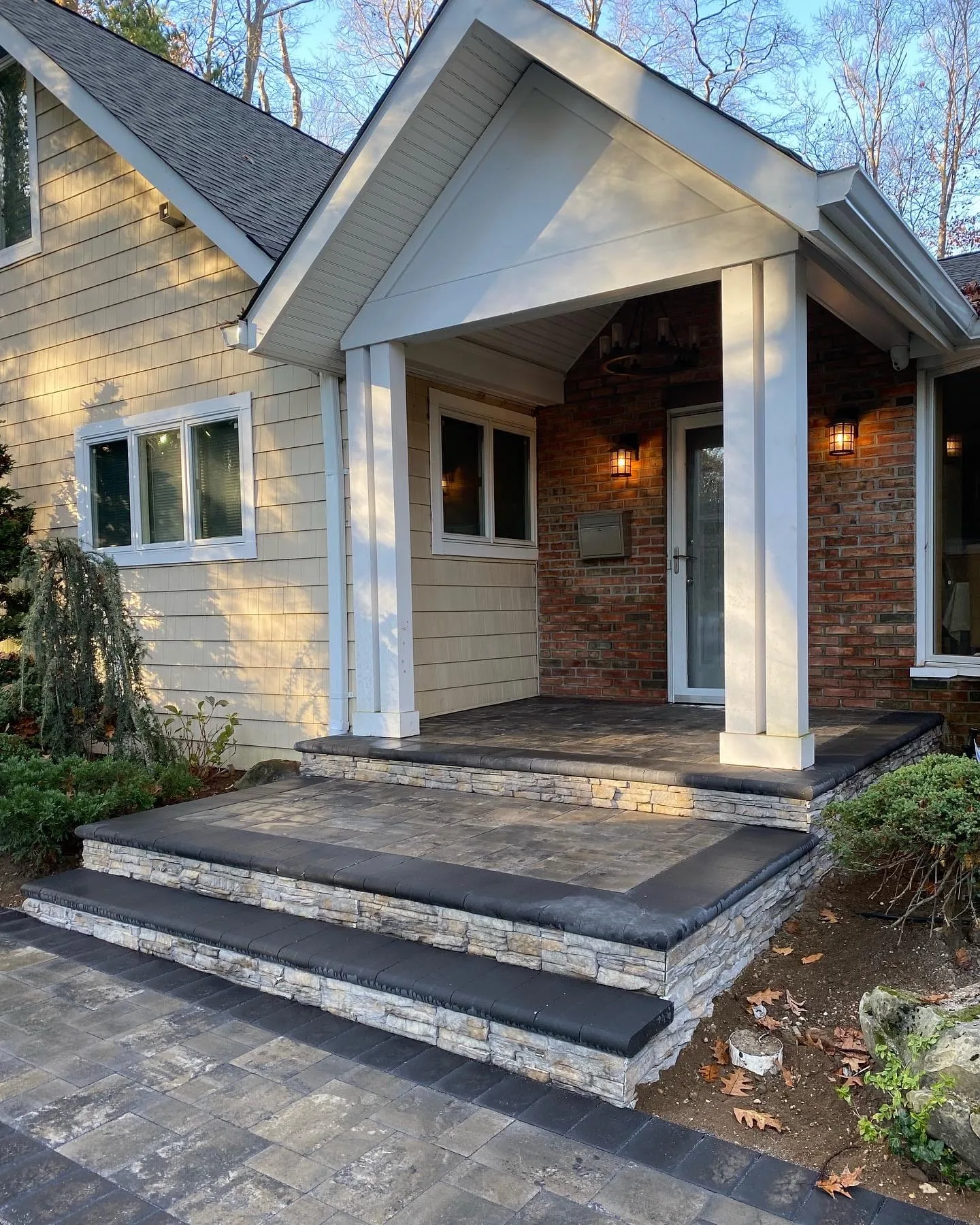
A masonry porch extends the living space of your home outward, creating a functional and inviting area where your family can relax, greet guests, and enjoy the outdoors. Unlike a compact stoop, a porch offers a broader platform — often covered — with room for seating, planters, and architectural details like columns and railings that define your home's character. On Long Island, a well-built masonry porch adds significant curb appeal and real estate value while providing a durable, weather-resistant structure that stands up to our coastal climate.
At Brothers Paving, we design and build custom masonry porches using brick, natural stone, concrete block, and premium finishing materials. Whether you are replacing a deteriorating porch that has become unsafe or adding an entirely new one to enhance your home's facade, our team delivers structural integrity and craftsmanship you can see and feel.
## What Is a Masonry Porch?
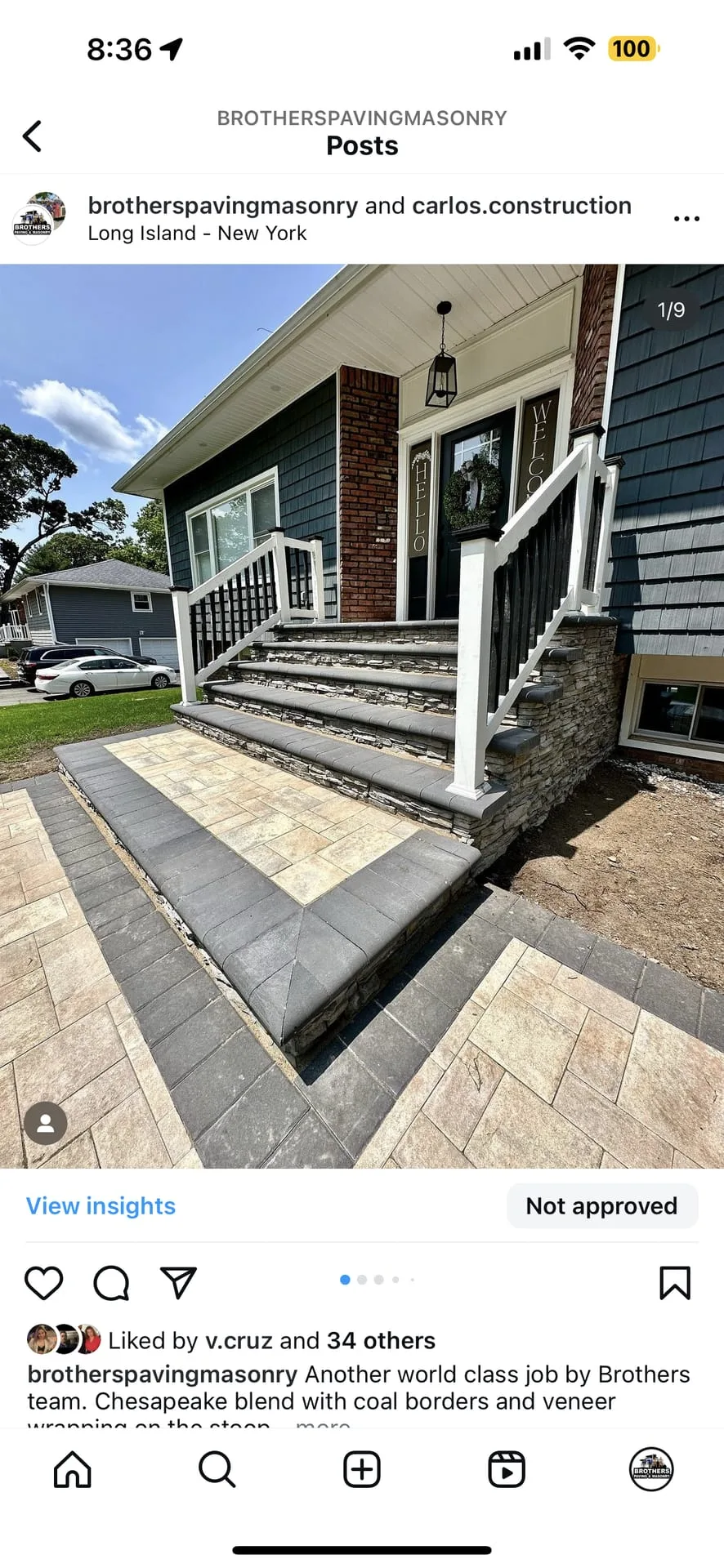
A masonry porch is a raised, structurally supported platform attached to the front, side, or rear of a home. It is built from load-bearing masonry materials — concrete block walls, brick, or stone — set on a poured concrete footing. The porch deck is typically finished with brick pavers, bluestone slabs, or natural stone, and the perimeter may include knee walls, columns, and railings. Many Long Island porches incorporate a roof supported by masonry or wrapped columns, creating a sheltered area that extends the usability of the space through spring, summer, and fall.
Porches differ from stoops primarily in scale. While a stoop provides just enough room to stand at the door, a porch offers a genuine outdoor living area — wide enough and deep enough to furnish with chairs, tables, or a porch swing.
## Safety Concerns With Aging Porches
Older masonry porches on Long Island frequently show signs of structural distress: cracking floor slabs, leaning columns, crumbling step edges, separating mortar joints, and settlement that causes the porch to pull away from the house. These issues are more than cosmetic. A structurally compromised porch can collapse under load, and uneven surfaces create fall hazards, particularly for children and elderly family members.
The root causes are typically the same ones that damage stoops — freeze-thaw cycling, water infiltration, shallow or undersized footings, and soil settlement — but the consequences are amplified by the larger scale of a porch structure. A porch that is settling or cracking needs professional evaluation to determine whether it can be repaired or must be rebuilt from the foundation up.
## Benefits of a New Masonry Porch
A professionally built masonry porch delivers multiple benefits:
- **Curb appeal.** A well-designed porch transforms the entire look of your home's facade, creating a welcoming focal point that sets your property apart in the neighborhood. - **Home value.** Real estate professionals consistently rank front porch additions among the highest-return exterior improvements. Buyers are drawn to homes with attractive, functional entryways. - **Safety.** Replacing a deteriorating porch eliminates structural and tripping hazards, giving you confidence that your family and visitors are safe. - **Outdoor living space.** A porch provides a shaded, semi-protected area to enjoy morning coffee, evening conversations, or simply watching the neighborhood. - **Durability.** Masonry porches built on proper foundations with quality materials last 50 years or more with minimal maintenance.
## Our Porch Construction Process
Our approach to porch construction follows a proven sequence:
**1. Design consultation.** We meet with you on-site to discuss your vision, measure the space, and evaluate the existing conditions. We review material options, column styles, railing designs, and layout possibilities to create a plan that complements your home.
**2. Demolition.** If an existing porch must come down, we handle complete demolition and debris removal. We inspect the underlying soil and any existing footings to determine what can be reused and what must be replaced.
**3. Foundation work.** We excavate and pour reinforced concrete footings below the frost line. For larger porches, we may install multiple pier footings to distribute the structural load evenly.
**4. Structural masonry.** We build the porch walls, support piers, and step structures using concrete masonry units, brick, or stone. The interior is backfilled with compacted gravel and, where needed, a concrete slab is poured for the porch deck.
**5. Columns and railings.** If your design includes columns, we build them from masonry block and finish them with brick, stone veneer, or stucco wraps. Railings are installed to meet local building code height and spacing requirements.
**6. Surface finishing.** The porch deck, steps, and caps are finished in your selected material — brick pavers, bluestone, brownstone, granite, or natural stone. We slope the surface slightly away from the house to promote water runoff.
**7. Final details.** We complete the project with mortar joint tooling, cleanup, and a walkthrough with you to ensure every detail meets your expectations.
## Materials
We build masonry porches using:
- **Concrete block (CMU)** — The structural core of most porch builds, providing strength and stability. - **Brick** — Used for walls, veneer, column wraps, and paver surfaces in a wide variety of colors and bond patterns. - **Natural stone** — Fieldstone, ledgestone, and full-bed stone for walls and veneer with a natural, textured look. - **Bluestone** — The most popular choice for porch deck surfaces and stair treads on Long Island, valued for its beauty and slip resistance. - **Brownstone** — Ideal for homes with traditional or historic architecture. - **Granite** — Premium treads and caps with exceptional durability.
## Long Island Climate and Code Considerations
Long Island's freeze-thaw climate means that water management is essential in porch construction. We incorporate waterproof membranes beneath finished surfaces, install proper drainage behind retaining walls and beneath porch slabs, and use air-entrained mortar rated for freeze-thaw exposure. All footings are poured below the local frost line — approximately 36 inches — to prevent heaving.
We work within the permit requirements of Nassau and Suffolk County municipalities. Porches that exceed certain height or area thresholds trigger building permit requirements, and we manage the entire permitting and inspection process on your behalf.
## Maintenance
Masonry porches require very little upkeep. Sweep the surface regularly, inspect mortar joints each spring for signs of erosion, and repoint any deteriorated joints promptly. Seal bluestone or natural stone surfaces every three to five years with a penetrating sealer to protect against moisture absorption and staining.
## Why Brothers Paving
Our masonry crews have decades of combined experience building porches on Long Island. We understand the structural demands, the local code requirements, and the design details that make a porch look like it belongs with your home. From initial consultation through final walkthrough, we manage every aspect of the project so you get a porch that is safe, beautiful, and built to last.
Every project is unique. Here are the main factors that influence pricing:
Call us today for a free, no-obligation estimate.
Or call us now: (631) 374-9796