Loading...
Loading...
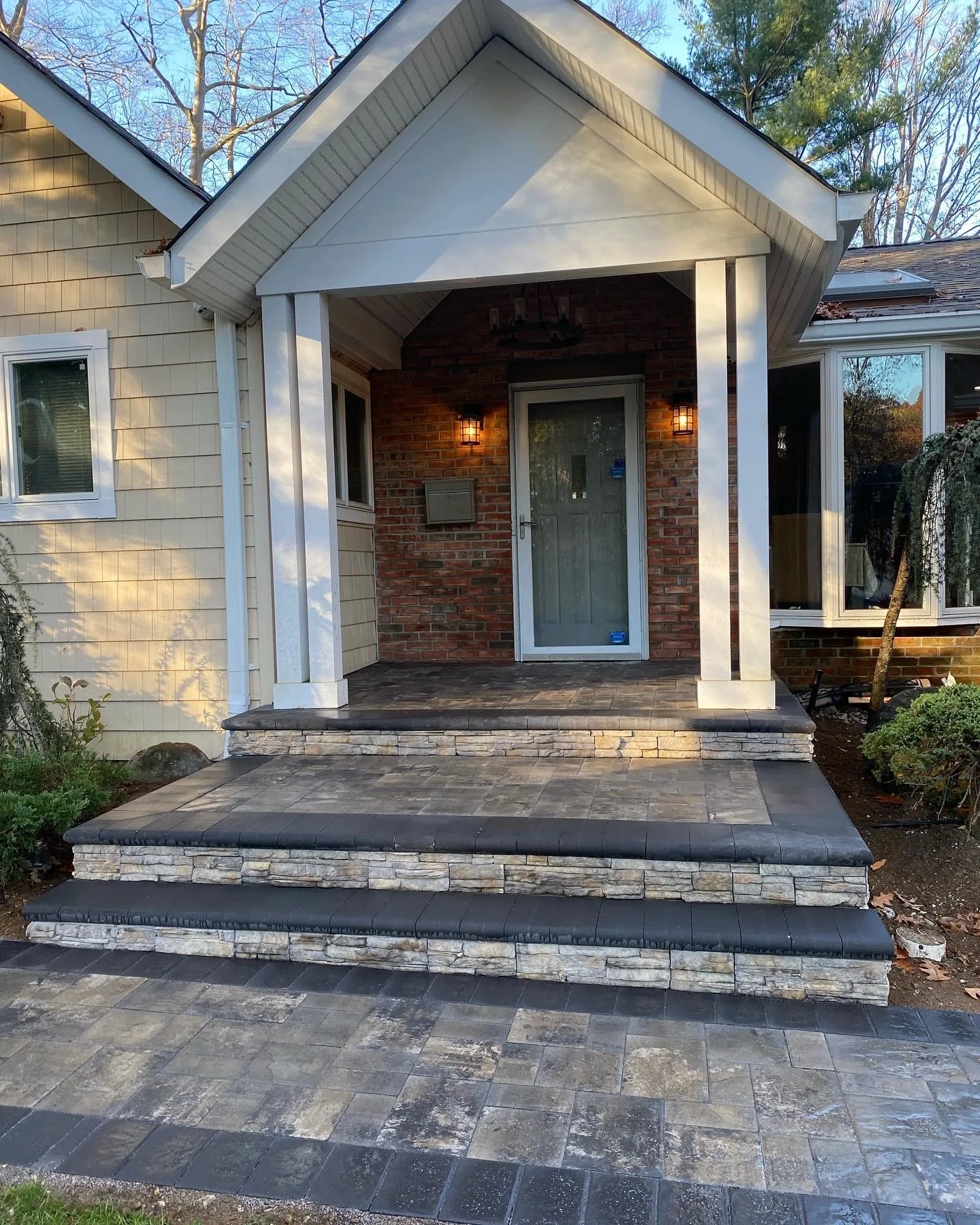
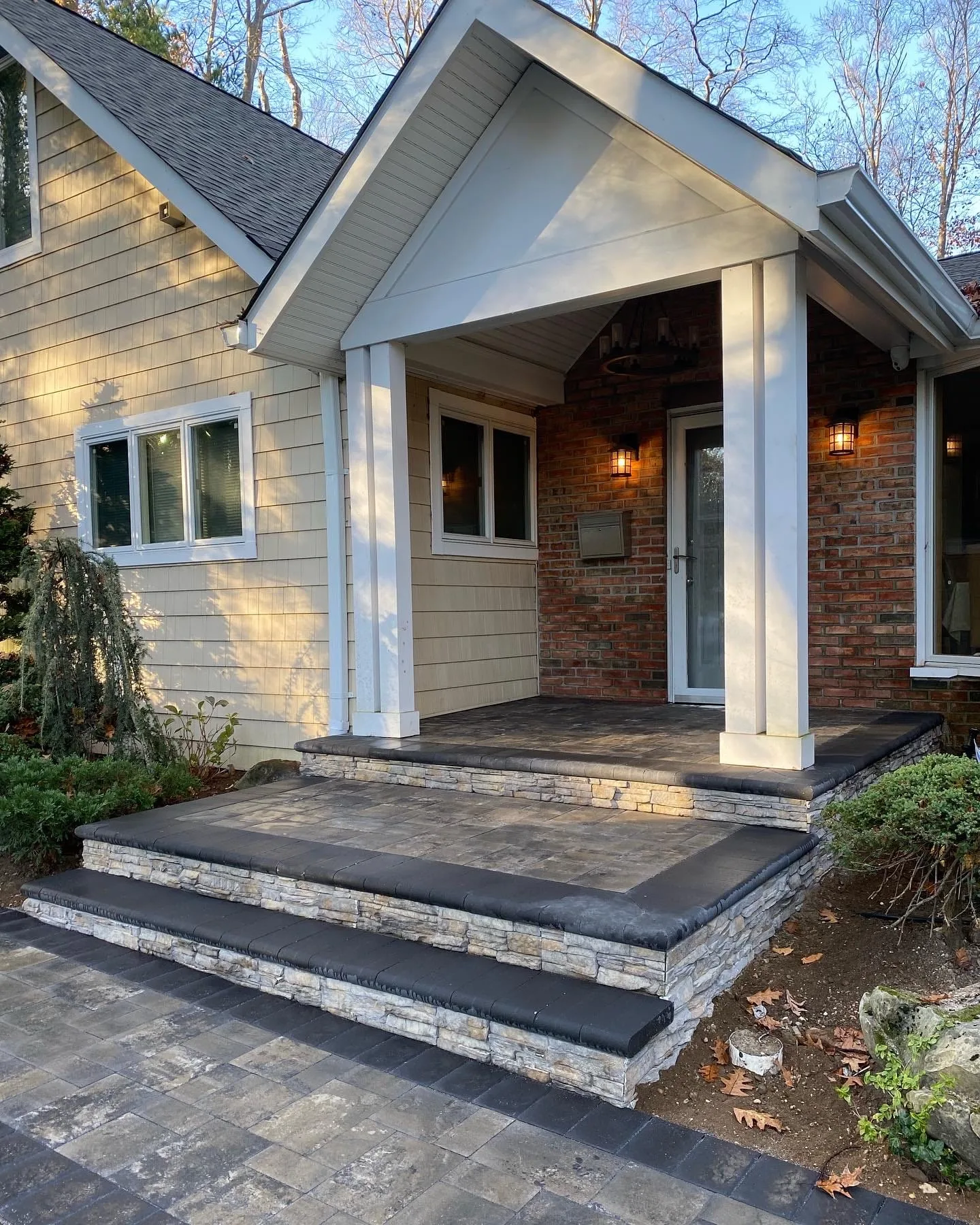
Bluestone, brownstone, and granite caps and treads for stoops and porches on Long Island. Expert installation to protect your masonry and enhance curb appeal.
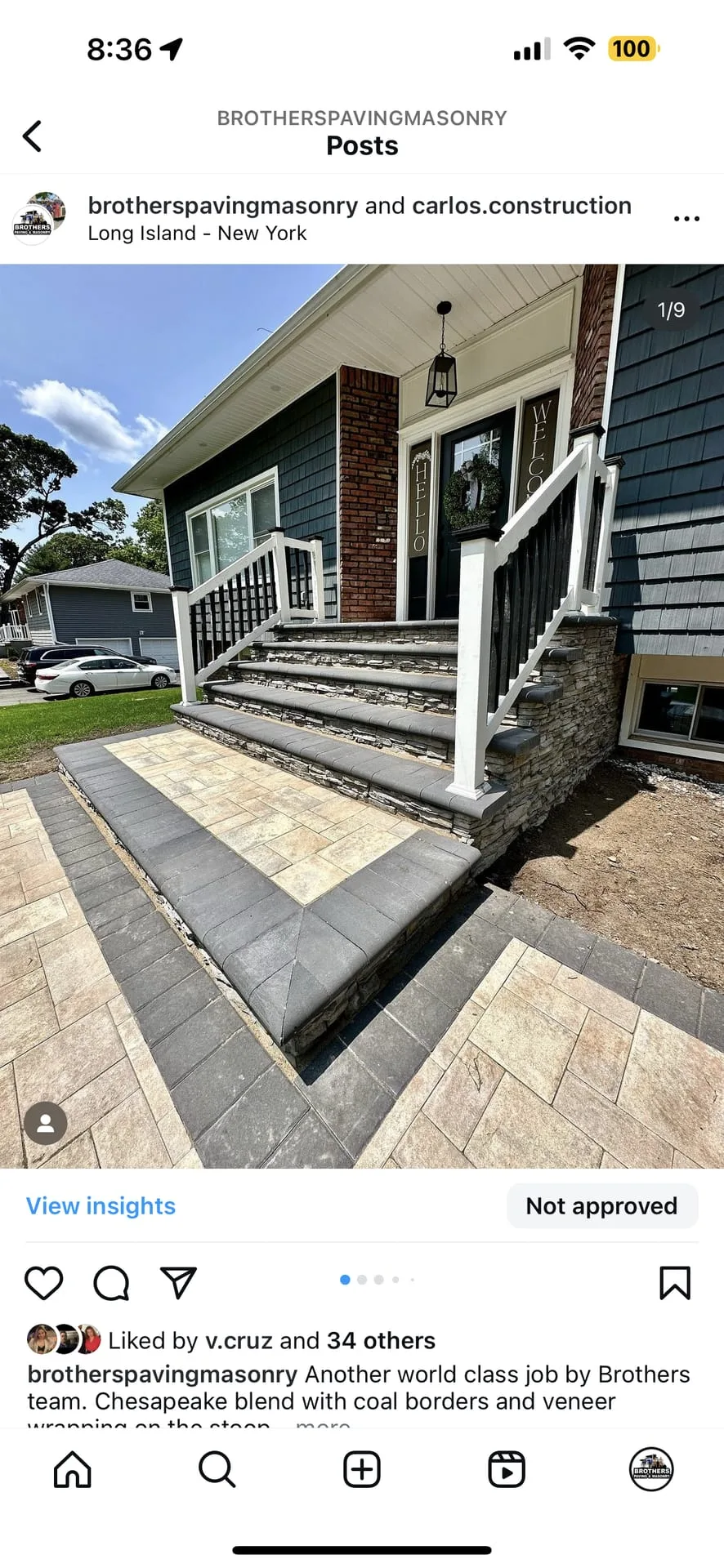
Stone caps and treads are the finished surfaces that crown your stoop walls, columns, and steps. They are the elements you see and touch every day — the smooth bluestone slab you step onto, the brownstone cap that tops a porch knee wall, the granite tread edge your hand brushes as you reach for the railing. These finishing details do far more than add visual appeal; they serve as the primary moisture barrier that protects the underlying masonry structure from water infiltration and freeze-thaw damage. At Brothers Paving, we supply and install premium stone caps and treads that combine lasting beauty with critical protective function.
## What Are Stone Caps and Treads?
A **stone cap** (also called a coping stone or cap stone) is a flat or slightly sloped piece of natural or fabricated stone that sits on top of a masonry wall, column, or pier. Its purpose is twofold: it finishes the top of the structure with a polished, architectural appearance, and it sheds water away from the masonry below, preventing moisture from penetrating downward into mortar joints and block cores.
A **stone tread** is the horizontal stepping surface of a stair — the part your foot lands on. Treads are typically made from a dense, slip-resistant natural stone and are sized to overhang the riser face slightly, creating a shadow line that defines each step visually and directs water off the step edge.
Together, caps and treads are the finishing layer of any masonry stoop, porch, or step system. They take the brunt of foot traffic, weather exposure, and UV radiation, so material quality and proper installation are essential.
## Why Caps and Treads Matter
Many homeowners do not realize that a cracked or missing cap stone is one of the most common entry points for water damage in masonry structures. When the cap fails, water flows directly into the wall or column interior, saturating the mortar and block. Through Long Island's winters, this trapped water freezes and expands repeatedly, causing the structure to deteriorate from the inside out — often in ways that are not visible until significant damage has occurred.
Similarly, worn or damaged treads create slip hazards on steps. A tread with a crumbling edge, a smooth-worn surface, or a loose setting bed is an accident waiting to happen, particularly in wet or icy conditions.
Replacing damaged caps and treads is one of the most cost-effective masonry investments you can make. It extends the life of the underlying structure, restores the appearance of your entryway, and improves safety — often without requiring a full rebuild of the stoop or porch.
## Stone Options
We work with the following stone types for caps and treads:
- **Bluestone** — The signature stone of Long Island masonry. Its natural cleft surface provides excellent traction, and its blue-gray color palette ranges from deep charcoal to lighter silver tones. Bluestone is dense, durable, and naturally weather-resistant, making it the most popular choice for both caps and treads throughout Nassau and Suffolk Counties.
- **Brownstone** — A warm, reddish-brown sandstone with historic significance on Long Island and throughout the Northeast. Brownstone caps and treads complement Colonial, Victorian, and Tudor-style homes and are frequently specified for restorations of older properties.
- **Granite** — The hardest and most durable natural stone option. Granite caps and treads are virtually impervious to wear, scratching, and freeze-thaw damage. Available in polished, honed, and thermal (flamed) finishes. Thermal-finished granite provides excellent slip resistance.
- **Limestone** — A softer, lighter-toned stone that offers a clean, refined look. Best suited for sheltered applications or in combination with a high-quality penetrating sealer.
- **Precast concrete** — A budget-friendly alternative that can be formed to replicate the look of natural stone. Available in a range of colors and textures. Well-made precast caps and treads provide good performance at a lower material cost.
## Benefits of Professional Cap and Tread Installation
- **Moisture protection.** Properly installed caps with a slight slope and adequate overhang prevent water from entering walls and columns, dramatically extending the life of the masonry below. - **Safety.** New treads with consistent dimensions and textured surfaces reduce the risk of slips and falls on your steps. - **Curb appeal.** Fresh stone caps and treads instantly refresh the appearance of a stoop or porch, often making an aging structure look nearly new. - **Cost efficiency.** Replacing caps and treads is significantly less expensive than rebuilding an entire stoop or porch, yet delivers a major visual and functional improvement. - **Material longevity.** Quality natural stone — particularly bluestone and granite — withstands decades of weather and foot traffic with minimal wear.
## Our Installation Process
**1. Assessment.** We evaluate the condition of the existing caps, treads, and the masonry substrate beneath them. If the underlying structure is sound, we can proceed with cap and tread replacement only. If there is structural damage below, we recommend addressing that first.
**2. Removal.** We carefully remove existing caps and treads, cleaning the substrate surface to prepare for new installation. Old mortar beds are chipped away to provide a clean bonding surface.
**3. Stone preparation.** Each cap and tread piece is measured, cut, and dry-fitted to ensure precise sizing and consistent joint widths. For bluestone and brownstone, we select pieces with complementary color and grain patterns for a cohesive appearance.
**4. Setting.** Caps and treads are set in a full mortar bed using a high-quality, polymer-modified setting mortar that provides superior adhesion and flexibility. Each piece is leveled, sloped for drainage, and positioned with the correct overhang.
**5. Jointing and sealing.** Joints between cap and tread pieces are filled with matching mortar and tooled. Once cured, we apply a penetrating sealer to natural stone surfaces to protect against moisture absorption, staining, and efflorescence.
## Long Island Freeze-Thaw Considerations
The single most important factor in cap and tread longevity on Long Island is keeping water out of the mortar bed beneath the stone. We achieve this by using polymer-modified setting mortars that resist water penetration, sloping all caps for positive drainage, providing adequate overhang to direct runoff away from the wall face, and sealing the stone surface and joints. These details are what separate a cap installation that lasts five years from one that lasts thirty.
## Maintenance
Sweep caps and treads regularly to prevent dirt and organic material from holding moisture against the stone. Reapply penetrating sealer every three to five years — more frequently for high-traffic treads. Inspect mortar joints each spring and repair any cracks or erosion promptly. Avoid using rock salt as a deicer on natural stone; use calcium chloride or sand instead.
## Why Brothers Paving
Cap and tread work is detail-oriented finish masonry — it requires precise cutting, careful material selection, and meticulous installation technique. A poorly installed cap that does not slope correctly or overhang adequately will fail within a few winters, undermining the structure it was meant to protect. Our masons understand these details and execute them consistently, project after project. Whether you need a single column cap replaced or a full set of bluestone treads and caps for a new porch, we deliver the quality and precision that Long Island homeowners expect.
Every project is unique. Here are the main factors that influence pricing:
Call us today for a free, no-obligation estimate.
Or call us now: (631) 374-9796